
January Updates from Effective Altruism Turkey
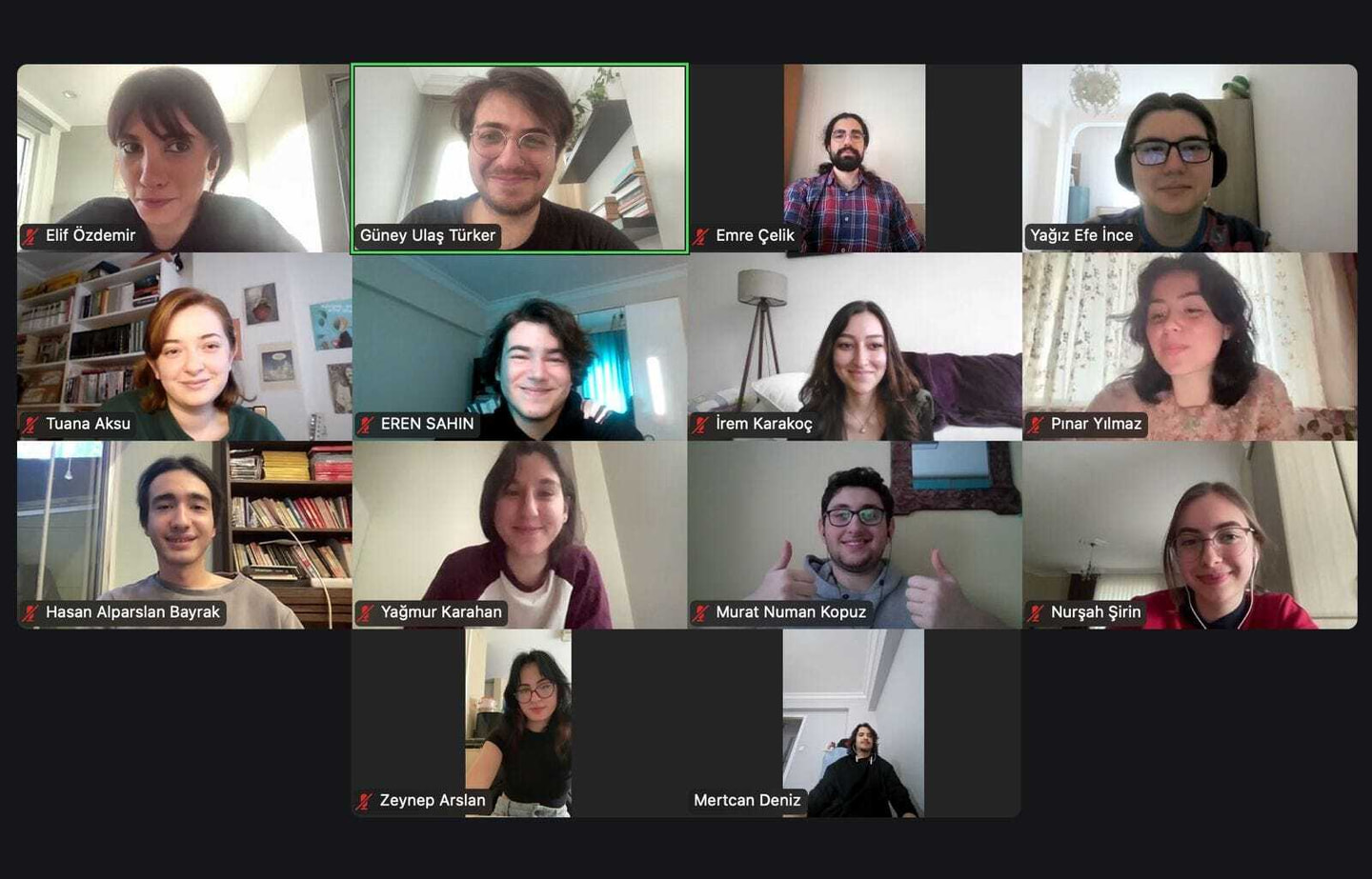
Leaders of effective altruism communities at Boğaziçi, Bilkent, Koç and Hacettepe Universities came together to prepare for the upcoming spring semester and strengthen cooperation between communities. At the meeting, each community shared their experiences from the previous semester and exchanged ideas on event planning, methods of increasing member participation, and strategies for raising awareness on campuses.
📢 Announcements
Effective Altruism Turkey University Group Organizers Meeting
Leaders of effective altruism communities at Boğaziçi, Bilkent, Koç and Hacettepe Universities came together to prepare for the upcoming spring semester and strengthen cooperation between communities. At the meeting, each community shared their experiences from the previous semester and exchanged ideas on event planning, methods of increasing member participation, and strategies for raising awareness on campuses.
Effective Animal Advocacy Reading Group
What can we do to increase the strength of the animal advocacy movement? Is it possible to develop more effective strategies, critically evaluate existing approaches and make a real difference for animals? These questions form the basis of the Effective Animal Advocacy Reading Group. This 8-week online reading group offers a learning and discussion platform for anyone who wants to create a better world for animals. With this program, participants will have comprehensive access to important concepts and discussions in the field, starting from the basic level. You will have the opportunity to explore different perspectives and develop your own activism practice in a friendly and supportive environment.
🗓️Deadline: February 18
EA Ankara’s Introduction to Effective Altruism Program
A six-week discussion group developed to determine which problems in the world are priorities, to develop the most effective solutions, and to ensure that individuals take responsibility for the solutions. In this program, which will be conducted face-to-face by EA Ankara, you can discuss the question of how we can better help people and other creatures on both a theoretical and practical basis, and have the opportunity to explore different perspectives and develop your own path of influence in a friendly and supportive environment. The first meeting will take place on Saturday, March 1st at 16:00 at Kızılay Selanik Route Cafe and will be open to everyone interested.
🗓️Deadline: March 4
AIM Research Program 2025
Applications for AIM Research Program 2025 are now open. This 12-week, online and free program aims to equip participants with the skills to analyse, compare and develop strategies for effective charities and interventions. Participants will gain in-depth knowledge of impact philanthropy and impact-focused research and have the opportunity to shape their careers in this field.
🗓️Deadline: February 2
AI Safety, Ethics and Society Program
AI Safety Center has opened applications for the free and online “AI safety, Ethics and Society” course, which will take place between February 24 and May 16, 2025. The course aims to provide participants with knowledge and practical tools to address AI-related challenges, such as the misuse of AI and the weakening of security standards due to international competition. Although applications for the course, which lasts 12 weeks and requires a time commitment of 5 hours per week, are open until February 5, 2025, priority will be given to those who apply until January 31.
🗓️Deadline: February 5
Long Term Future Fund 2025
The Long-Term Future Fund has started accepting applications for the first support program of 2025. The fund aims to support individuals and organizations working to secure the long-term future of humanity and manage existential risks. Additionally, projects that aim to increase the long-term welfare of humanity will also be included in the evaluation. This presents a significant opportunity for those who aim to create long-term impact at both the individual and corporate level.
🗓️Deadline: February 15
Tarbell Fellowship 2025
Would you like to be one of the journalists who shape the effects of artificial intelligence on society? Tarbell Fellowship 2025 offers a great opportunity for those who aim to make an impact in this field. The program provides 9 months of work opportunities in prestigious media organizations such as TIME and MIT Technology Review, artificial intelligence journalism training and grants of up to $50,000.
🗓️Deadline: February 28
Transformative AI Introduction Program
Artificial intelligence technologies are changing and developing rapidly. This 5-day intensive and fast-paced online program from BlueDot Impact is designed at an introductory level for those who want to understand what transformative AI is and evaluate its impact on humanity. Participants will explore the technical foundations of AI, examine possible future scenarios, and discuss important ideas for ensuring AI security in an interactive environment.
Application deadline: Limited to quota
📖Selected Readings
The ugly sides of two approaches to charity — EA Forum
The effective altruism of the New York Times an article criticizing In “The ugly sides of two approaches to charity,” written in response, Julia Wise contrasts effective altruism (or philanthropy based on measurable impact) with traditional approaches to philanthropy that prioritize cultural wealth. Discussing these approaches through the example of 47,500 malaria deaths that could have been prevented with the $760 million spent on the restoration of the Notre Dame Cathedral, Wise examines the strengths and problematic aspects of both methods and proposes a vision that balances basic needs and cultural richness.
Preparing Effective Altruism for an AI-Transformed World — EA Forum
In his article “Preparing Effective Altruism for an AI-Transformed World”, Tobias Häberli questions why we divide the fields of work into “AI Security and everything else”. Instead of asking whether we should focus on AI security or other areas, he proposes a more fundamental question: If predictions that artificial intelligence will fundamentally change the world are true, how should we approach non-AI security cause areas? Drawing attention to the question of whether projects in areas such as global health and animal welfare can be effective in such a future, he argues that the reality of artificial intelligence should be integrated into all studies.
Have we cured AIDS? The incredible progress we’ve made against HIV, explained. | Vox
Vox’s global health correspondent Jess Craig covers the current state of HIV/AIDS in depth. Although scientific advances have made the disease largely controllable, Craig emphasizes that inequality and discrimination around the world still pose significant obstacles to combating the disease. It points to the possibility that this positive trend may pause as a result of the risk of funding cuts for critical programs such as PEPFAR and the decrease in global support due to the change of government in the United States and the general political conjuncture.